When Does Cannabis Start to Flower? Your Week-by-Week Guide
Have you started doing it yet? The daily pilgrimage to your cannabis plant, leaning in close, maybe squinting a little, and asking the big question: “Is that… a bud?”. When you’re new to the world of cannabis cultivation, the waiting game can feel like a huge secret that every other grower is in on.
I got tired of the mystery, so I decided it was time to find a real answer to the big question: when does cannabis start to flower? I’ve spent countless hours diving into forums, reading guides, and piecing together all the information I could find. Now, I’m putting it all in one place for you. Think of this as our shared study guide where we’ll cover the first signs to look for and what’s happening during each incredible week of the bloom phase. Let’s get some answers together.
Table of Contents
What Actually Triggers a Cannabis Plant to Start Flowering?
Okay, so for weeks, our cannabis plant has had one job and one job only: grow, grow, grow. It’s been busy pushing out leaves, getting taller, and just living its best life in what’s called the vegetative stage.
But then, at some point, it gets a secret signal to completely switch gears. Its new mission? To stop growing taller and start producing buds. So, what’s the big secret? As my research uncovered, for most cannabis strains, it all comes down to a change in light.
The Magic Light Switch: Understanding the Light Cycle
For the most common type of cannabis plant (called a photoperiod strain), light is everything. As long as it’s getting lots of light—say, 18 or more hours a day like an indoor grower might provide—it stays in that vegetative stage, happily growing leaves and stems.
The trigger for the transition to flowering is darkness. Specifically, long, uninterrupted periods of it.
When the plant starts experiencing 12 hours of complete, uninterrupted darkness every single day, it basically thinks, “Whoa, the days are getting shorter! Winter must be on its way, and I need to make some flowers (buds) before it’s too late!”
For anyone cultivating cannabis indoors, this is the magic formula: switching the light timer to a schedule of 12 hours on, 12 hours off (often called “12/12”) is the signal that initiates flowering. You essentially become Mother Nature and tell the plant exactly when it’s time to bloom.
But What About Autoflowers and Outdoor Cannabis?
Now, just when I thought I had it figured out, I learned about the rebels of the cannabis world: autoflowering strains.
These plants are a bit different. Their genetics (which come from a cannabis variety called Ruderalis) mean they don’t wait for a signal from the light cycle. Instead, they operate on their own internal clock and will automatically start to flower after a certain amount of time, usually just a few weeks after sprouting, no matter how many hours of light they get.
For those growing outdoors, their cannabis plant follows the same photoperiod rules as an indoor one, but the sun is the timer. After the longest day of the year (the summer solstice, around late June), the days naturally begin to shorten. This gradual decrease in daylight is the signal for the plant to start preparing for its flowering phase. That’s why, in many parts of North America, an outdoor cannabis plant will typically start to flower sometime in late July or August as the days become noticeably shorter.
The Telltale Signs: How to Know Flowering Is Starting
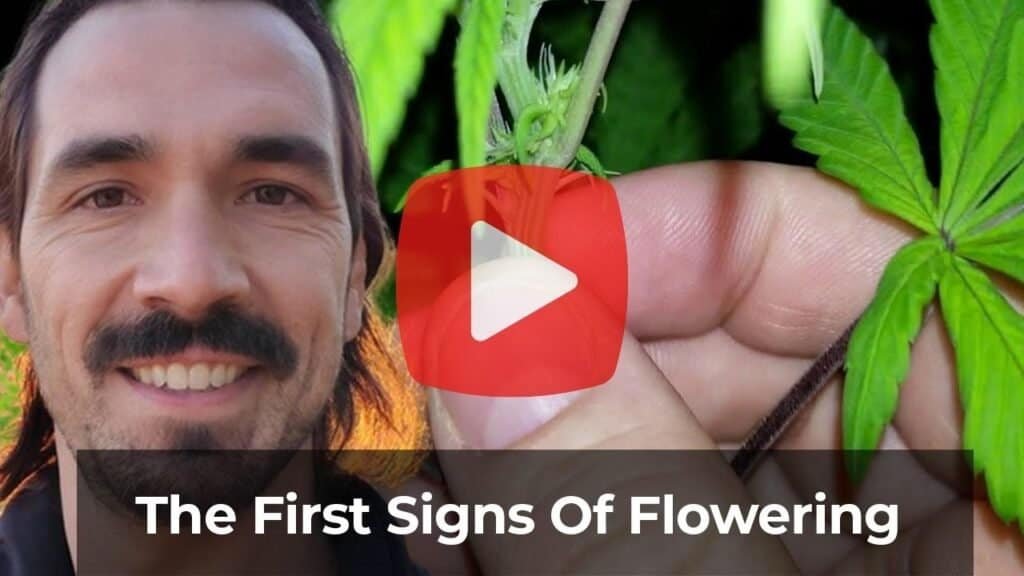
So, the light schedule has changed, and we’ve officially told our plant it’s time to get to work. But it’s not like a switch flips and buds magically appear overnight (if only, right?). The transition is subtle at first. For a week or two, you might be staring at your plant thinking nothing is happening at all. But if you know what to look for, you can spot the first signs of flowering and confirm the magic is beginning. From what I’ve read, these are the two biggest clues that the show is about to start.
It’s a Girl! Spotting the First Pistils (aka Little White Hairs)
This is the big one. The first definitive, undeniable sign that your female cannabis plant is entering the pre-flowering stage is the appearance of pistils. So, what are they? Pistils are the plant’s female reproductive organs, but to us, they look like delicate, wispy white hairs.
You’ll need to look closely at the plant’s nodes—the little intersections where the branches meet the main stem. In those little nooks and crannies, you’ll start to see these tiny white hairs emerge, often in pairs. These are the very beginnings of your future buds! When you see these, you can do a little happy dance. This is your plant officially showing you it’s a female and it’s getting ready to build its flowers at these bud sites. For a new grower, this is probably the most exciting moment of the entire vegetative and early flowering phase.
Get Ready for “The Stretch”: The Pre-Flowering Growth Spurt
Around the same time you spot the first pistils, you might notice something else pretty dramatic: your plant is suddenly getting tall. Really tall. This phase, which all the guides call “the stretch,” is one of the most surprising signs of flowering. For the first two to three weeks after the light change, your cannabis plant can undergo a massive growth spurt, sometimes doubling in height.
Honestly, learning about this was a huge “aha!” moment for me. This isn’t just random growth; it’s the plant’s final, energetic push to gain as much height and space as possible to support the heavy buds it’s about to produce. It’s also why so many experienced growers recommend switching to the flowering light cycle when the plant is about half of its desired final height. So, if you see your plant shooting up, don’t panic! This rapid vertical growth is a perfectly healthy and normal part of its transition to flowering.
The Main Event: The Cannabis Flowering Stage Week by Week
Alright, the signs are there and the transition is official. Welcome to the cannabis flowering stage! This is the most dynamic and exciting part of the plant’s life, and for us, it’s when we get a front-row seat to watch the buds develop. The entire flowering phase can last anywhere from 7 to 10 weeks, or even longer depending on the cannabis strain. What I’ve learned is that Indicas tend to flower faster, while Sativas can take their sweet time.
Think of the following as a general flowering timeline. Each plant has its own personality, but this week-by-week guide I’ve pieced together from research should give us a great map of the journey ahead.
Weeks 1-3: The Big Stretch and Early Bud Formation
This initial phase is all about explosive growth and setting the foundation for future buds.
- Week 1: The plant is officially in the early flowering stage. The biggest change you’ll see is the continuation of “the stretch.” The plant is focusing its energy on gaining height and size. At the various bud sites (the nodes), you’ll see more and more of those white pistils popping up, forming what many growers call “budlets” or little crowns.
- Week 2: The stretch is likely hitting its peak. Your cannabis plant might still be growing taller, but it should start slowing down by the end of this week. Now, you’ll start to see the first true leaves growing from the center of the budlets—these are called sugar leaves. The little crowns of pistils are starting to look more like tiny, fuzzy pom-poms.
- Week 3: By now, the stretch should be complete. Hallelujah! The plant’s vertical growth has stopped, and it is now ready to devote all its energy to fattening up those little pom-poms into proper buds. At this point, the bud sites are clearly visible and are starting to become more substantial. This is also when many growers make sure they have the plant’s nutrient mix dialed in, shifting away from Nitrogen (for vegetative growth) and focusing more on Phosphorus and Potassium, which are the key nutrients needed for flower development.
Weeks 4-5: Buds Start Stacking and Getting Frosty
If the first few weeks were about setting the stage, this phase is when the main actors really start to shine. The cannabis buds are no longer just little puffs; they’re actively growing, fattening up, and developing their character.
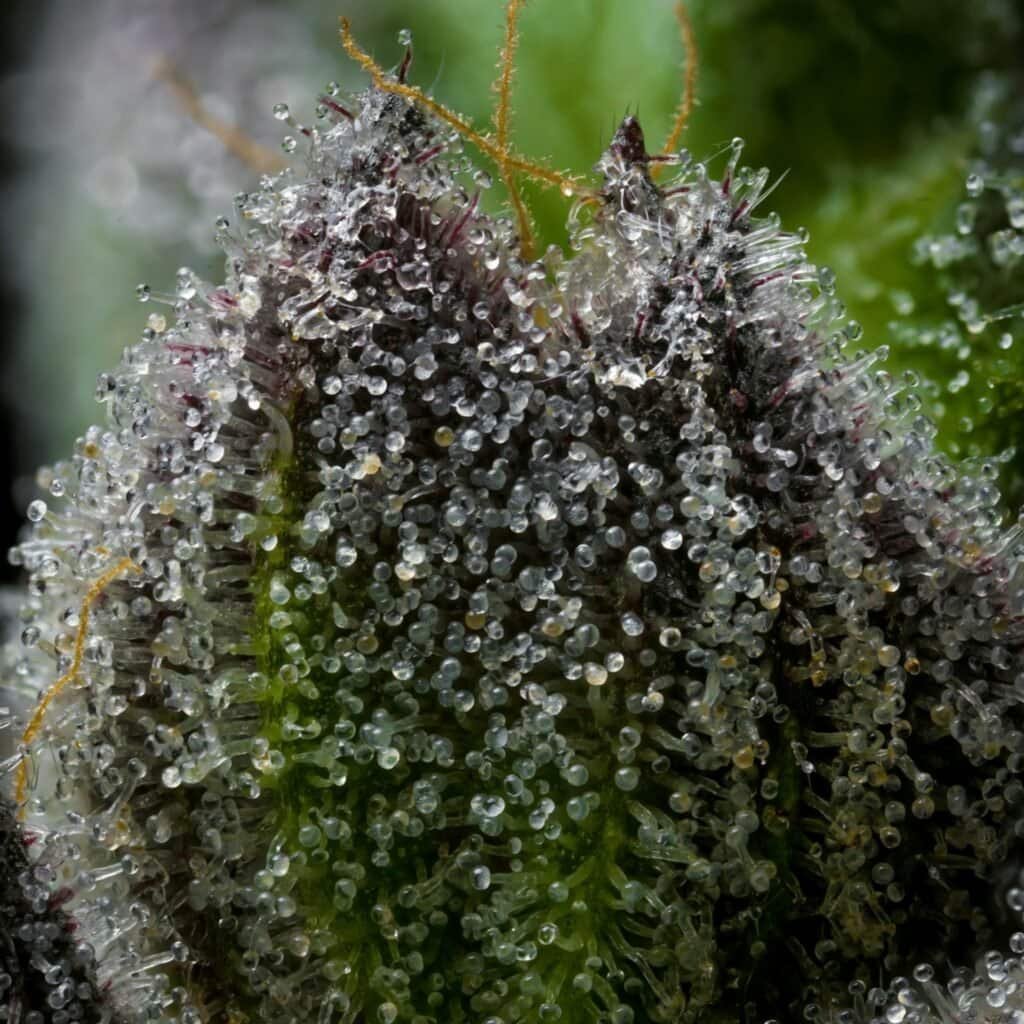
- Week 4: This is when you’ll really see the flower development kick into high gear. The buds are getting noticeably bigger and are starting to stack together, forming longer colas. One thing I’ve seen mentioned in a ton of grower forums is that this is when the smell often starts to become much more pungent. The plant’s terpenes are ramping up production, creating that distinct cannabis aroma. This is also the week when the real magic starts to appear: trichomes. If you look closely (a magnifying glass helps!), you’ll see a frosty, sugary coating beginning to form on the buds and nearby leaves. These tiny, crystal-like glands are the factories that produce the cannabinoids and terpenes we’re all here for.
- Week 5: The growth continues. Your cannabis buds are swelling, and more of them might be merging into larger, dense colas. The trichome production is in full swing now, making the flowers look beautifully frosted. You might also notice that some of the earliest white pistils are beginning to darken, turning a brownish or amber color. My research shows this is a totally normal sign of maturation, so don’t be alarmed! The buds will continue to produce new, fresh white pistils as they grow. For many strains, this week marks the halfway point of the flowering timeline.
Weeks 6-8: Bulking Up and Ripening
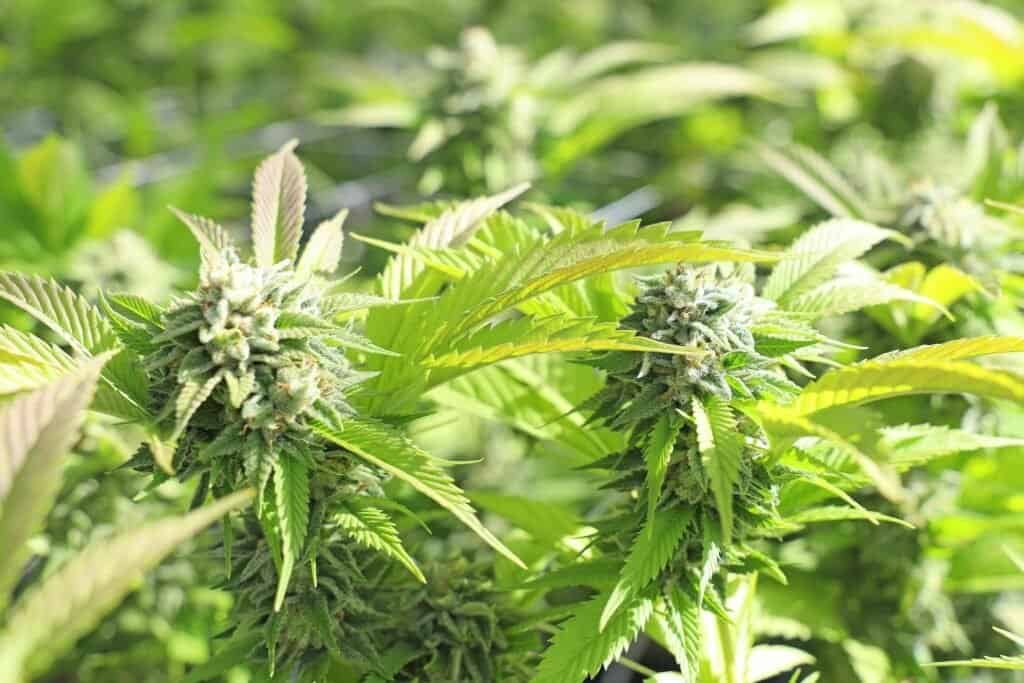
Welcome to the late flowering stage! During this period, the buds might not seem to be getting much bigger, but they are getting denser and packing on serious weight. The plant is now putting all of its energy into ripening its flowers. The aroma is likely at its peak, and the buds are incredibly sticky to the touch.
- Week 6: The buds are now solid and heavy. The individual calyxes (the little pods that make up the bud) are swelling, making the flowers feel much denser. You’ll notice that the majority of the white pistils have now darkened to an orange or amber color and are starting to curl inwards. The plant has pretty much stopped all other types of growth; its one and only job now is ripening those flowers.
- Week 7: The ripening process is in full swing. At this point, the most important thing I’ve learned from my research is that harvest time is determined by the color of the trichomes, not the pistils. To see them properly, growers use a jeweler’s loupe or a small digital microscope. They’re looking for the tiny mushroom-shaped glands to change color:
- Clear trichomes mean the plant is not yet at peak potency.
- Milky or cloudy trichomes indicate peak THC levels and a more energetic effect.
- Amber trichomes signify that the THC is starting to convert to CBN, which is often associated with a more relaxing or sedative effect.
- Week 8: For many cannabis strains (especially quicker Indicas), this is the final week. The buds are dense, ripe, and should feel heavy for their size. Most growers, from what I’ve gathered, look for a trichome mix that is mostly cloudy with a small percentage (maybe 10-30%) showing a distinct amber color. This is often considered the ideal window for a balanced and potent harvest. The end is in sight!
Week 8 and Beyond: The Final Push and Getting Ready for Harvest
For those longer-flowering strains, like many Sativas, the journey might continue into week 9, 10, or even longer. The process is the same—continued ripening, watching the trichomes—it just requires a bit more patience. No matter the strain, these final stages are all about observation and preparing for the finish line.
One of the most common practices I’ve read about for this final week or two is called “flushing.” The concept is simple: you stop giving your plant nutrients and feed your plants with only plain, pH-balanced water.
The theory behind this is that it encourages the plant to use up any remaining nutrients stored in its leaves and buds. Many growers believe this process helps to produce a smoother, better-tasting final product by flushing out excess mineral salts that can cause harshness. Think of it as a final cleanse before the big day. While it’s a hot topic for debate online, with some cultivators swearing by it and others skipping it, it’s a very common step in many guides for beginners. Typically, those who recommend it suggest starting the flush about one to two weeks before you plan to harvest your cannabis, once your trichomes show you the plant is nearly ready for harvest.
Indoor vs. Outdoor Flowering: Does It Change the Timeline?
We’ve just walked through the entire week-by-week journey of a flowering cannabis plant, which is super helpful. But one of the biggest things I learned is that the starting pistol for this race is fired differently depending on where you’re growing. The biological process is the same, but the trigger is worlds apart. It all comes down to a battle of total control versus the rhythm of nature.
Being the Master of Your Domain: Flowering Cannabis Indoors
When you’re cultivating cannabis indoors, you are in complete command. You become the sun. You control the light cycle. This means an indoor grower can decide exactly when to initiate the flowering stage. After the plant has been in its vegetative stage for a few weeks (or months, it’s up to the grower!), they can manually switch their light timer to the 12/12 schedule we talked about.
This level of control is the biggest advantage of indoor growing. It allows a grower to time their harvest perfectly, fit the plant’s final size to their tent or room (remembering “the stretch”!), and even have multiple harvests per year, regardless of the season outside. This control over the environment is a key component for a successful cannabis cultivation journey from start to finish.
Following the Sun: When Outdoor Plants Naturally Start to Flower
For those growing outdoors, the power is in Mother Nature’s hands. Outdoor plants are tied to the seasons, and they take their cues directly from the sun. Cannabis plants typically start their flowering phase after the summer solstice (around June 21st in the Northern Hemisphere), once the days gradually start getting shorter and the nights get longer.
This means the timing for the flowering start outdoors depends entirely on your location. For growers in places like Ohio, New York, or Michigan, this natural signal becomes strong enough in late July or August. In fact, as I’m writing this in mid-August, countless outdoor plants in these regions are likely just beginning to show their first pistils. While this approach is more natural and cost-effective, it also means the grower is on a fixed schedule with one harvest per year and must contend with whatever the local weather decides to throw at them.
Your Top Questions Answered (By a Fellow Newbie Grower)
Diving into the world of cannabis cultivation brings up a ton of questions. As I was piecing together the flowering timeline, I kept hitting little roadblocks and wondering about the “what ifs.” Here are the answers to some of the most common questions I could find, which will hopefully help clear things up for you, too.
How big should my cannabis plant be before I start flowering?
This was one of the biggest questions I had, and the answer I found is: it depends on your space. The most important thing to remember is “the stretch.”
Since a cannabis plant can double in size during the first few weeks of the flowering phase, the most common piece of advice for an indoor grower is to flip the lights to 12/12 when the plant is about half of the final height you want it to be.
If you have a 5-foot-tall grow tent, for example, letting your plant get to about 2-2.5 feet tall before flipping is a safe bet.
For outdoor growers, this is out of your hands—the plant will grow as big as the season allows before nature tells it to flower.
What kind of nutrients should I use during the flowering phase?
Just like a person’s dietary needs change, a cannabis plant needs a different kind of food during its flowering phase. My research showed that the key is to lower Nitrogen (N) and increase Phosphorus (P) and Potassium (K).
Nitrogen (N) is for leafy, green growth in the vegetative stage.
Phosphorus (P) is crucial for flower and resin production.
Potassium (K) helps with overall plant function and bud density.
Most nutrient companies make this easy by selling specific “bloom” or “flower” nutrient formulas that have the right ratio for this stage. You’re basically switching from a “growth” formula to a “bloom” formula.
What happens if I start flowering too early or too late?
This question is mainly for the indoor grower who has control over the light cycle.
Starting Too Early: If you flip a very small, young plant to flower, it will still produce buds, but the final yield will likely be very small. The plant hasn’t had enough time to build a strong root system and branch structure to support big, heavy flowers.
Starting Too Late: If you wait too long to flip, your plant might become a monster during the stretch! It could easily outgrow your tent or room, leading to problems like buds getting too close to the hot lights (“light burn”) or poor air circulation around the dense foliage.
It’s all about finding that sweet spot that works for your specific setup.
And there you have it! The big mystery of the cannabis flowering stage, broken down piece by piece. It turns out, it’s not so mysterious after all. We’ve learned that the journey from a leafy plant to a budding flower is triggered by a simple change in light. We now know to look for those first wispy pistils and to prepare for the incredible pre-flower stretch. Most importantly, we have a week-by-week roadmap to guide us through the entire bloom phase, from those first tiny budlets to the final, frosty harvest.
Hopefully, having all this research in one place makes the process feel less intimidating and a lot more exciting. Watching your plant transform is one of the most rewarding parts of this hobby.
Now that we’ve covered this crucial stage in detail, you can see how it fits into the plant’s entire journey in our complete pillar guide to the cannabis lifecycle.