How to Read a Cannabis Lab Report: A Beginner’s Guide to a Certificate of Analysis (COA)
I’ve been a medical cannabis patient for a few months now, and honestly, I thought I was getting the hang of it.
Then, on my last trip to the dispensary a few days ago, I got curious. I saw that little QR code on the package- the one I’d been ignoring this whole time- and decided to finally scan it.
My phone opened up a PDF, and I honestly had no idea what I was looking at. It might as well have been written in a foreign language. What was THCA? Why were there so many different numbers and acronyms? I was just trying to understand my medicine, not get a science degree.
This article is the result of me falling down a research rabbit hole to figure it all out, and I’m sharing everything I learned so you don’t have to.
Let’s decode these things together. We’ll walk through a Certificate of Analysis (COA) step-by-step, explaining what each section means for you as a patient and, just as importantly, what it can teach us as aspiring growers.
Table of Contents
First Things First: What is a Certificate of Analysis (COA)?
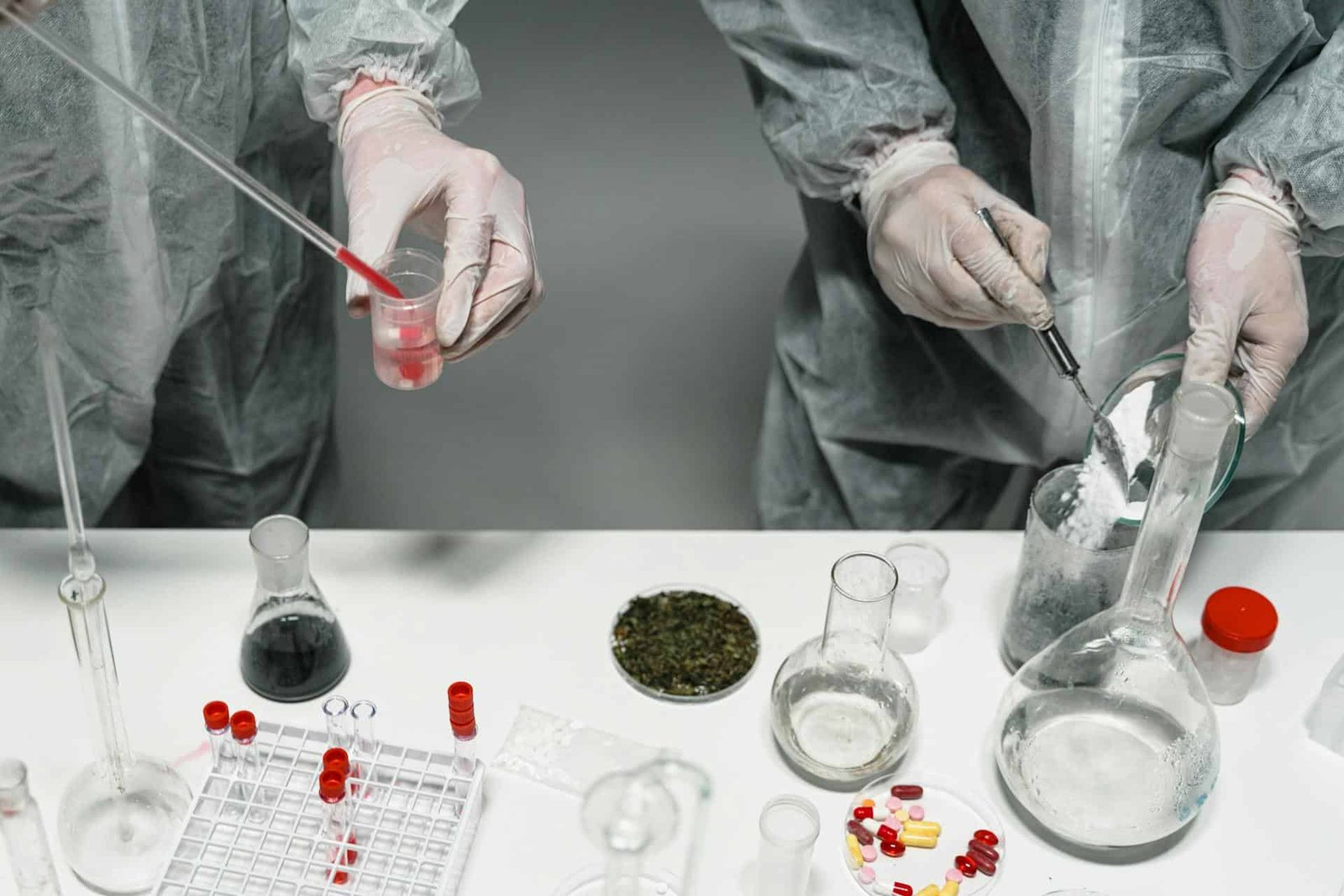
So, that confusing PDF we’ve been talking about? Its official name is a Certificate of Analysis, and it’s often abbreviated as a COA. The concept is actually pretty simple. Think of the COA report as the official report card for a specific batch of cannabis.
It’s a document from a scientific lab that details exactly what is (and isn’t) in the cannabis product. It’s the ultimate proof that what’s on the label is actually in the package.
Why a Third-Party Lab Test is a Big Deal for Safety
You’ll hear the term “third-party lab test” thrown around a lot, and it’s a really big deal. At first, I didn’t get why it was so important- it just sounded like more jargon. But then it clicked: you wouldn’t want a student grading their own homework, right? Same idea.
“Third-party” simply means that the test was conducted by an independent laboratory that has no financial stake in the company that grew or produced the cannabis. This ensures the results are unbiased and not just marketing fluff designed to make a product look better than it is. It’s a critical layer of transparency that helps guarantee the safety and quality of the medicine you’re using. Without it, you’re just taking the company’s word for it.
How to Find the Lab Report on Your Cannabis Product
Okay, so where is this magical report card? As I found out, it’s usually hiding in plain sight. The most common way to find a COA is by scanning a QR code printed directly on the cannabis product’s label or packaging.
Just open your phone’s camera, point it at that little square pattern, and it should prompt you to open a link. That link usually takes you straight to the COA for the exact batch you’re holding. If you don’t see a QR code, don’t panic.
If the video above doesn’t help because you have an iPhone, here’s a great tutorial for that, too (I’m personally an Android guy, don’t judge 😁).
The other common method is to look for a “batch number” or “lot number” printed on the packaging. You can then go to the producer’s website and type that number into a search bar to view the full COA.
Breaking Down the Header: Who, What, and When?
Alright, so you’ve got the lab report open on your phone. At first glance, it can still feel like a huge wall of text and numbers. The first thing I learned to do- before trying to tackle any of the complex science-y stuff- is to just look at the very top of the document. Think of this as playing detective. You need to verify the basic facts of the case before you dig into the evidence.
Identifying the Producer and the Third-Party Testing Lab
The first chunk of information should answer two simple questions: Who made this, and who tested it? You should see the name of the cannabis producer or cultivator listed clearly. It’s a quick, easy check to make sure their name matches the brand you just bought.
More importantly, look for the name of the third-party testing lab. A trustworthy Certificate of Analysis will always list the cannabis lab that performed the test analysis, often including their address and state license number. This is a huge green flag. It means the laboratory is putting its own name and reputation on the line and standing by its results. If you can’t tell who did the testing, you have to wonder what they might be hiding.
Why You Should Always Check the Batch Number and Test Date
This next part was a big lightbulb moment for me. You’ll see a “Batch Number” or “Lot Number” on the report. You have to match this number to the one printed on your product’s packaging.
Think of it like matching the VIN on a car title to the VIN on the car itself. If the numbers don’t match, the report is for a different batch of product, and the information is basically useless for what you’re holding. This single check is probably the most important step to verify if the lab report is the right one.
Equally important is the test date. A report with a recent date- like this one from August 5, 2025- is much more reliable than one from a year ago. Cannabis can change over time as it ages, so a fresh test gives you the most accurate snapshot of its current potency and terpene profile.
The Main Event: Cannabinoid Profile and Potency
Now we get to the part that most people care about when they look at a lab test. This section tells you about the strength of the cannabis and gives you clues about its potential effects. This is where you find the percentages for all the famous (and not-so-famous) compounds in the plant, starting with the main cannabinoid: THC.
THC vs. THCA: My First ‘Aha!’ Moment with a Lab Test

When I first saw both THC and THCA listed on a report, I was completely confused. This was a huge “aha!” moment for me. It turns out that the raw cannabis plant doesn’t actually contain much of the THC that causes a high (known as Delta-9-THC). Instead, it’s full of THCA (C22H30O4), which is the non-intoxicating, acidic form.
THCA only converts into psychoactive THC (C21H30O2) when you apply heat- a process called decarboxylation. So, when you use a lighter, a vaporizer, or cook with cannabis, you’re converting that potential energy (THCA) into active energy. This is why eating raw cannabis flower won’t produce the same effects. Understanding this difference was a game-changer for me.
Reading Potency for CBD and Other Minor Cannabinoids
Beyond the THC variants, you’ll see a list of other cannabinoids. The most common one you’ll find is CBD (cannabidiol). CBD is a major cannabinoid that is non-intoxicating but is studied for a wide variety of potential therapeutic effects. Depending on the strain, you might see a high CBD percentage and a low THC percentage, or vice-versa.
You may also see trace amounts of “minor” cannabinoids like CBG (Cannabigerol) or CBN (Cannabinol). We won’t go deep on those here, but seeing them listed is a good sign of a detailed test analysis.
Putting It Together: Total THC and Total Cannabinoid Numbers
So, with all these different numbers, how do you know the actual strength? This is where the “Total THC” number is your best friend.
Since THCA has to be converted, you can’t just add the two percentages together. There’s a bit of math involved (don’t worry, the lab does it for you!). The formula looks something like this:
Total THC = (%THCA * 0.877) + %THC
Note: That 0.877 accounts for the weight lost during the heating process.
The “Total THC” or “Max THC” value on the report is the number that gives you the best estimate of the potency you’ll actually experience. When I want to quickly gauge the potential strength, this is the value I look for first.
More Than Just a Smell: Decoding the Terpene Profile
You know that distinct smell of cannabis? Or how one strain can smell citrusy and another like a pine forest? That’s all thanks to compounds called terpenes. For the longest time, I thought that’s all they did- create smells and flavors. But as I’m learning on this journey, the terpene profile is one of the most important parts of a lab report for anyone trying to dial in the right effects.
What is a Terpene Profile Analysis?
A terpene profile analysis is exactly what it sounds like: a breakdown of the most prominent terpenes found in that specific cannabis sample. Terpenes are basically the aromatic essential oils found in all sorts of plants- lavender, oranges, pine trees, you name it. Cannabis just happens to have a very wide and rich variety of them. The lab test will list which terpenes are present and at what concentration, usually in percentages or parts per million (PPM). Think of it as an ingredient list for the strain’s unique aroma and character.
How Reading the Terpene Lab Test Can Help You Predict Effects
This is where it gets really interesting for me as a patient. I’m learning that two strains with the exact same THC percentage can feel completely different. The reason for this often comes down to the terpene profile.
While the science is still developing, it’s believed that terpenes work together with cannabinoids to produce the overall experience- a theory often called the “entourage effect.” For example:
- A strain high in Myrcene might produce more relaxing or sedating effects.
- A strain with lots of Limonene may feel more uplifting and mood-boosting.
- High levels of Linalool (also found in lavender) might be good for calming anxiety.
By looking at the terpene lab test, you can start to move beyond simple potency numbers or outdated Indica/Sativa labels. It gives you more data to help you choose a cannabis strain that’s more likely to give you the specific relief you’re looking for.
Key Takeaway
- Cannabinoids (like THC and CBD) are the engine- they provide the main power.
- Terpenes (like Myrcene and Limonene) are the steering wheel- they guide the experience and determine the type of ride you get.
- Looking at both gives you the full picture of what to expect!
The Safety Check: Making Sure Your Cannabis is Clean
While the potency and terpene numbers are the exciting parts, this next section of the lab report is arguably the most critical. This is where you confirm that your cannabis is actually safe to consume and free from harmful contaminants. For me as a patient, this part is absolutely non-negotiable. This is the proof that you’re getting clean medicine.
Pesticide Testing: Why “ND” (None Detected) is Your Best Friend
Seeing the long list of chemical names under the pesticide section was pretty intimidating at first. But I quickly learned that I didn’t have to be a chemist to read the results. You just need to look for one of two things next to each potential pesticide: the letters “ND” (which stands for None Detected) or a clear “Pass”.
A “Pass” result on a pesticide test means that even if a tiny trace was detected, it’s well below the legal safety limit set by the state. This simple check is your confirmation that the cannabis you’re about to use wasn’t grown with a bunch of nasty chemicals.
Screening for Heavy Metals and Other Contaminants
This part was a little unsettling to learn about. Cannabis plants are really good at absorbing things from their environment, and that includes heavy metals like lead, arsenic, and mercury that might be in the soil or water. You definitely don’t want to be inhaling those.
That’s why this heavy metal test is so important. The lab report will show the levels of these contaminants and, just like with the pesticide screen, you want to see a “Pass”. This is your proof that the grower used clean soil and water, giving you a much safer final product. Seeing a “Pass” on the heavy metal test gives me huge peace of mind.
Checking for Mold, Mycotoxins, and Solvents
This final part of the safety check looks for things you definitely can’t see but absolutely want to avoid.
The Microbials section of the report tests for harmful mold, mildew, and bacteria. The list can look just as intimidating as the pesticide panel, with scientific names like Aspergillus, E. coli, and Salmonella. But the good news is, you read it the exact same way: just scan the results column for a clean “Pass” or the letters “ND” for None Detected. This is your proof that the cannabis was grown and cured in a clean environment and is free of harmful microscopic contaminants.
The Residual Solvents test is most critical for concentrates like vape cartridges, wax, or shatter. It ensures that any chemicals used during the extraction process have been safely purged from the final product. Just like with everything else in the safety section, a simple “Pass” is exactly what you want to see.
For My Fellow Growers: How a COA Fits in Our Journey
Alright, let’s switch hats for a minute. Reading these reports is essential as a patient. But as someone just starting my own growing journey, I immediately started wondering- how does this apply to me and the plants I want to grow? The COA is more than just a consumer tool; it’s a powerful report card for the cultivator.
So, Can You Get a Lab Report for Seeds or Clones?
This was a big point of confusion for me when I started my research. The answer is a little different for seeds versus clones.
You can’t get a lab report for a seed. A seed is basically a genetic lottery ticket. It holds all the potential from its parent plants, but the final cannabinoid and terpene profile will depend entirely on how it’s grown. For seeds, the best you can do is study the breeder’s description of the strain’s genetics to get an idea of what’s possible.
For clones, however, it’s a different story. A clone is a direct genetic copy of its “mother plant.” You should always ask the dispensary or person you’re getting a clone from if they can provide a recent COA from the mother. This report is the best possible preview of that plant’s potential.
Why Testing Your Own Harvest is the Ultimate Grower’s Goal
Here’s what’s really driving me as I start this process. My dream isn’t just to grow a big, healthy plant. It’s to one day cure a perfect bud, send a sample to a testing lab, and get an official Certificate of Analysis back with my name on it as the cultivator.
That will be the real trophy.
Getting your own harvest tested is the only way to get unbiased, data-driven feedback on your skills. It tells you exactly how your specific growing techniques influenced the final outcome. It’s how you turn a hobby into a craft, with real cannabis testing data to prove your success.
Frequently Asked Questions (FAQ) About Cannabis Testing
As I was digging into all this, I realized I had a bunch of other little questions. Chances are, you might have them too. Here are the clear-cut answers to some of the most common ones I’ve found.
What does “third-party lab testing” actually mean?
We touched on this earlier, but it’s worth repeating. It means the laboratory that performed the test is an independent, separate company from the one that grew or produced the cannabis. This is what makes the lab test trustworthy- it’s an unbiased report on the product’s safety and quality, not just an “in-house” marketing sheet.
How do I know if I can trust the cannabis testing lab?
This is a great question. The key is to look for signs of professionalism and accreditation. A trustworthy lab should be licensed by its state’s cannabis control board. Even better, look for an “ISO/IEC 17025” accreditation. In simple terms, this is a rigorous international standard that proves a lab has high technical competence and generates valid results.
What’s considered a “high” THC percentage on a lab test?
This can be subjective, but here’s a general guide for modern cannabis flower:
10-15% Total THC: Generally considered mild to moderate potency.
15-25% Total THC: A very common and strong range for most products on the market today.
Above 25% Total THC: Considered very high potency.
But remember the entourage effect! A 19% THC strain with a rich terpene profile can feel much more effective than a bland 27% strain. A high THC level doesn’t always mean a “better” experience.
Can I use a COA to pass a drug test?
No. Absolutely not. This is a critical point of safety. A Certificate of Analysis is a document that describes what’s inside the cannabis product itself. A drug test is a medical test that looks for cannabis metabolites in your own system. Consuming a product that contains THC will cause you to fail a drug test for THC, period. A COA has no bearing on that whatsoever.
So, what did we learn on this little journey? We learned to play detective by checking the report’s header for the right batch number and a recent test date.
We figured out how to find the real potency by looking for the Total THC number, not just getting confused by THCA.
We discovered that the terpene profile is a powerful clue to a strain’s unique effects, and most importantly, we learned how to scan the safety tests to confirm our medicine is clean.
Remember that confusing wall of text I saw when I first scanned that QR code? It doesn’t seem so intimidating anymore. Taking a few minutes to understand a Certificate of Analysis is one of the most empowering things you can do as a patient or a home grower.
It shifts you from being a passive consumer to an educated advocate for your own health. You’re no longer just trusting a brand name or a cool package design; you’re using real data to make the best choices for your body.
Now it’s your turn. If you have a legal cannabis product nearby, find that QR code and give it a scan. See if you can spot the Total THC, find the top two or three terpenes, and confirm it passed all its safety checks. I’d love to hear about it- let me know in the comments if you have an “aha!” moment of your own.